

One of the most transformative 20th Century discoveries began not with a bang, but with a faint glow in a Parisian shed. When Marie Curie first isolated radium, she remarked on its “spontaneous luminosity” with the sort of wide-eyed wonder usually reserved for divine revelation. Little did she know, though the subsequent decay of her own health provided a grim hint, that she had invited a guest into the house who would contaminate everything it touched for the next 1,600 years.

By the 1930s, the world had decided that if a little bit of radiation could shrink a tumor, then a lot of it could surely fix everything else. We look back now from our vantage point of lead-lined caution and find it easy (perhaps too easy) to scoff at the sheer, unadulterated madness of the time. But to the public of the Depression-era West, radium was a bottled miracle that promised to “rejuvenate” a weary civilization.
It was used, quite literally, in everything.
There was Radithor, the “certified radioactive water” that promised to cure everything from impotence to “general malaise.” Its most famous advocate, the steel tycoon and socialite Eben Byers, reportedly drank nearly 1,400 bottles before his jaw - quite literally and inconveniently - fell off.

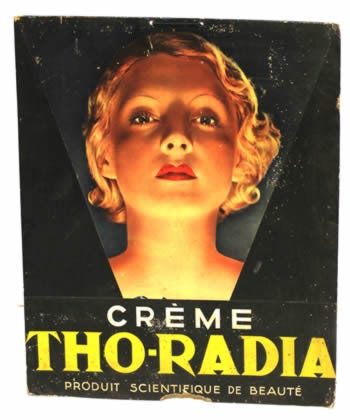
The craze didn’t stop at quack medicine. There was Tho-Radia, the French cosmetic line that promised a “radiant” complexion (a claim that was, for once, scientifically accurate, if biologically catastrophic). There was radium-infused bread, radium-brand butter, and even - God help us - radium-treated chocolate. The “Spicy Treasures” of the time weren’t just collectibles; they were the breakfast of champions and the doom of the middle class.
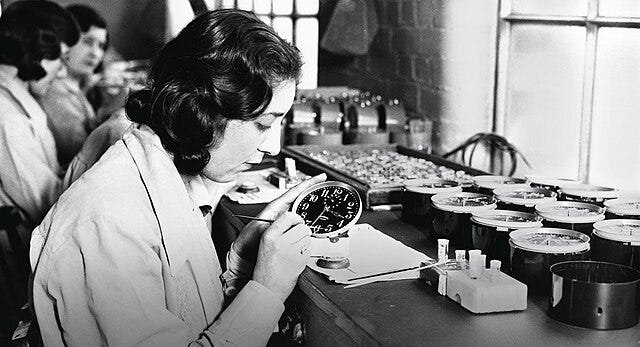
Then, of course, there were the “Radium Girls.” The dial painters of the U.S. Radium Corporation who, instructed to “lip, dip, and paint” with camel-hair brushes, became so impregnated with the stuff that they would glow in the dark on their way home from the factory. They were the first to learn that the “miracle” was, in fact, a slow-motion execution.
It is this precise intersection of human ingenuity and unforgivable ignorance that birthed this Substack, Radium Quest.
People often ask me why I spend my weekends prowling through dusty antique fairs with a Geiger counter in hand, listening for that frantic, staccato click-click-click that signals a “hot” find. They see a piece of red/orange-glazed Fiestaware or a luminous WW2 aircraft gauge and see a hazard. I see a relic of a time when radioactivity still wasn’t understood, or we were just brave enough to be stupid.
My Substack is not merely a catalogue of uranium glass and “spicy” relics. It is a chronicle of our species’ desperate, often hilarious, and occasionally tragic desire to touch the sun. When I find a 1930s clock dial that makes my Radiacode scream, I am holding a tangible piece of history, a physical manifestation of a time when progress felt like a literal light in the dark.
We live in an age of sterilized safety, of “precautionary principles” and bubble-wrapped government advice. And while I have no desire to see my own jaw detach itself at dinner, I do find myself yearning for the audacity of that era. RadiumQuest.com is my way of keeping that glow alive, whilst respecting the science to remain safe.
It is an intellectual and physical hunt for the remains of a beautiful, terrifying mistake. It is a reminder that even the most “scientific” of certainties can turn out to be a lethal joke. So, here’s to the 1930s: a decade that was, in every sense of the word, absolutely glowing.
Join me on the quest. But for heaven’s sake, don’t lick the brushes.